

Common Sense: A Conversation with Paul Jonna
TMS Special Counsel Paul M. Jonna on litigating Mirabelli v. Bonta to the highest court in the land
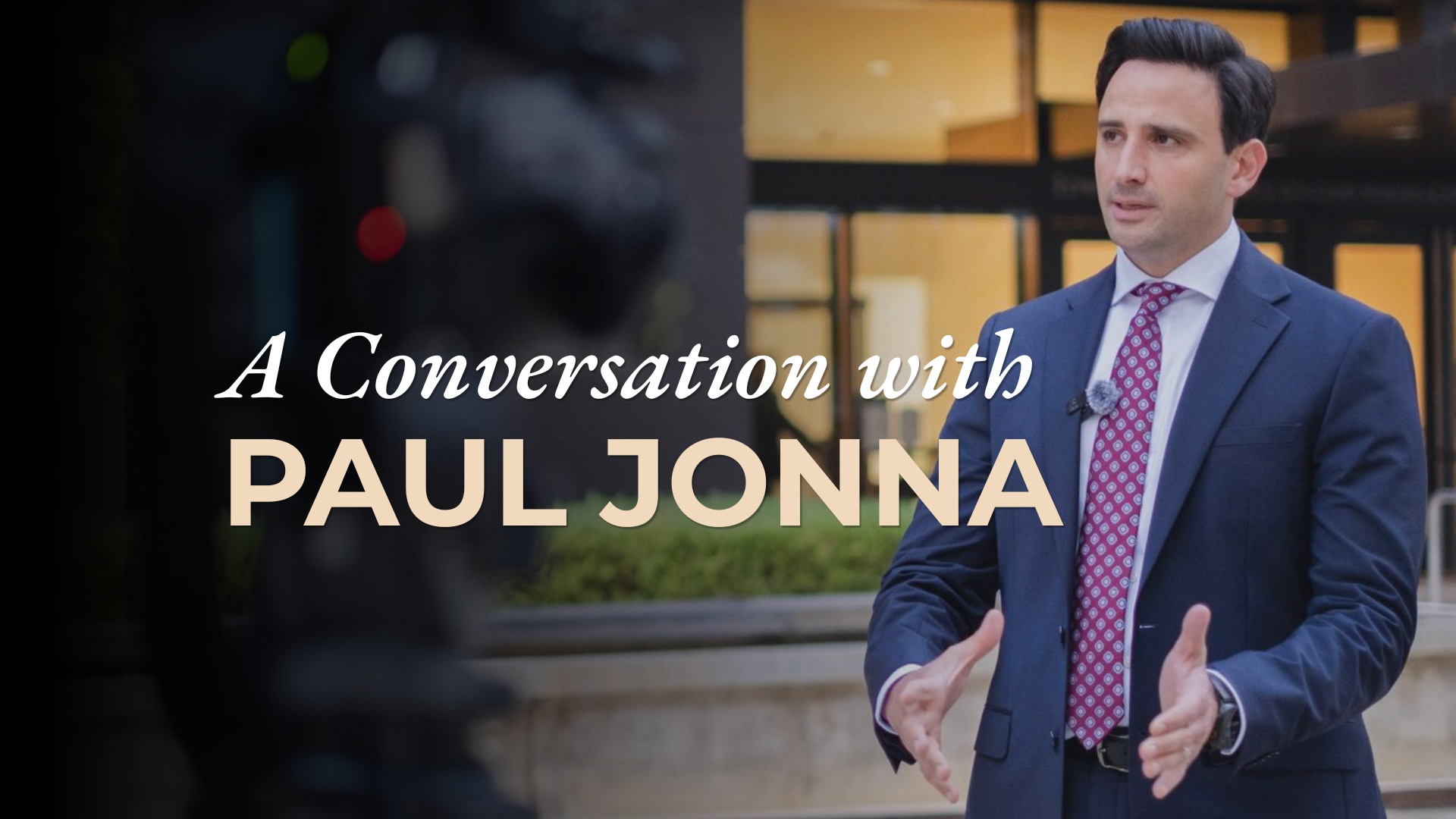
This interview originally appeared in the Thomas More Society 2025 Impact Report. To explore the full Impact Report, click here.
TMS: Elizabeth Mirabelli and Lori West never set out to be at the center of a national case. What have they sacrificed to see this fight through?
Paul Jonna: They were very brave to come out publicly and say, “We’re going to stand on our principles. We will not violate our faith to keep our jobs.” They drew a line in the sand, and as a result, they were harassed at school. They were basically forced out of the jobs they loved. These are veteran teachers who were Teacher of the Year award recipients—stellar records, unblemished reputations. They got all kinds of threats and harassment. They were not expecting to end their teaching careers at EUSD in this way, but they did, because they put the interests of their students first and they wouldn’t compromise on their faith.
TMS: One of the state’s central defenses was that these policies were merely guidance—suggestions, not mandates. How did that argument unravel in court?
PJ: From the very beginning, the state’s position has been, “Well, this is just guidance. These aren’t mandatory.” Their so-called guidance, which really was directives, made the case for us. It said, “You shall”—telling every school district in California, “You shall.” It used words like “shall” and “must”—like, “You must accept a child’s assertion of his or her gender identity, and you cannot tell the parents unless the child consents.” That doesn’t sound optional. It would use language like, “If you want to ensure minimum compliance with the law, then you need to adopt these policies,” and they would attach model policies. If you’re a school district and you get a notice like that, that doesn’t sound optional. We also pointed out to the court multiple times that they were going after any school district that dared to deviate from their so-called guidance. Nothing tells you that these are required and binding more than the state’s enforcement against schools that don’t follow them. That spoke volumes, and I think that was what ultimately convinced the court.
TMS: The state’s own experts conceded under oath that parental involvement is better for children. So what is really driving this fight on the other side?
PJ: Their own experts conceded under oath, when I took their depositions, that it’s better if parents are involved, it’s better if parents are aware, and it’s dangerous for a kid to have two identities—one at home and one at school. If you think about it, it’s all common sense. You don’t need to be an expert or a lawyer to know any of this. Why would it be a good thing to assume parents are not going to take care of their kids, to assume parents are unfit? We should always assume they’re fit unless there’s a grave reason to think otherwise. There are a lot of special interest groups—the ACLU, radical LGBT organizations—that have drafted these policies and work closely with state officials. It seems very clear to us that most people—most reasonable people, most judges who look at this—recognize very quickly, not only how blatantly unconstitutional these policies are, but also how dangerous and how illogical they are.
TMS: What does the landmark Supreme Court victory in Mirabelli mean for parents across the country?
PJ: This is truly an incredible and exceptional result. The U.S. Supreme Court’s ruling is binding precedent on every state and federal court in the nation—making clear for the first time that gender secrecy policies likely violate both the First and Fourteenth Amendment rights of parents. Every state and local official is now on notice: it’s time to completely do away with these dangerous policies and respect the fundamental rights of parents. There’s still a lot more work to do—but the heavy lifting is done, thanks be to God.
-p-2000.jpg)


